

+918048033479

Currently it only shows your basic business info. Start adding relevant business details such as description, images and products or services to gain your customers attention by using Boost 360 android app / iOS App / web portal.

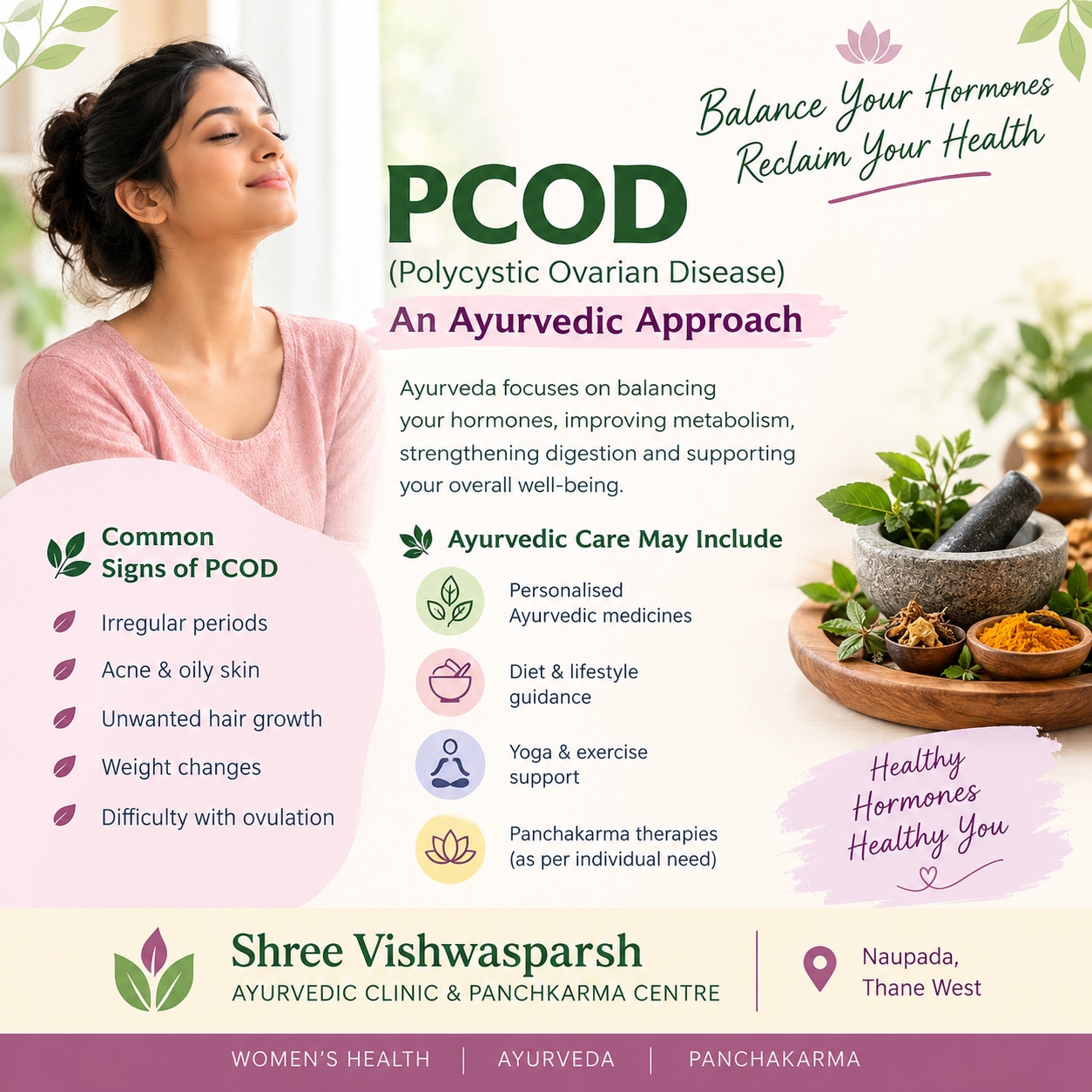
PCOD and Ayurveda: An Individualised Approach to Women's Hormonal Health Understanding PCOD, its symptoms, Ayurvedic management, Panchakarma and the importance of diet and lifestyle. PCOD (Polycystic Ovarian Disease), commonly discussed alongside PCOS (Polycystic Ovary Syndrome), is a hormonal and metabolic condition affecting women during their reproductive years. It may be associated with irregular menstrual cycles, acne, unwanted facial hair, weight changes and difficulties with ovulation. With changing lifestyles, stress, dietary habits and reduced physical activity, many women are seeking guidance on managing PCOD through a comprehensive approach that includes medical care, nutrition and lifestyle modifications. Common Signs and Symptoms of PCOD PCOD can present differently in different women. Commonly reported symptoms include: - Irregular or delayed menstrual periods - Acne and oily skin - Unwanted facial or body hair growth - Weight gain or difficulty managing weight - Hair thinning or excessive hair fall - Difficulty with ovulation - Challenges with fertility in some women Not every woman experiences all these symptoms. Proper medical evaluation is important for understanding the underlying cause. How Does Ayurveda Approach PCOD? Ayurveda looks at an individual's overall health rather than focusing only on menstrual irregularities. The Ayurvedic approach considers factors such as: - Dosha imbalance (Vata, Pitta and Kapha) - Agni (digestive and metabolic functions) - Ama (improperly processed metabolic waste, according to Ayurvedic concepts) - Lifestyle, sleep and dietary habits - Individual Prakriti and current health condition Based on an individual assessment, Ayurvedic management may include personalised medicines, dietary modifications, lifestyle guidance and selected Panchakarma procedures. Role of Panchakarma in PCOD Management Panchakarma is an important component of Ayurvedic clinical practice. However, it is not a compulsory or identical treatment protocol for every woman with PCOD. Depending on the individual's health assessment, Prakriti, symptoms and clinical suitability, an Ayurvedic physician may consider appropriate Panchakarma procedures. The purpose is to provide individualised care as part of a broader management plan. Panchakarma should not be considered a guaranteed cure for PCOD or a replacement for necessary medical investigations and treatment. Diet and Lifestyle: An Important Part of PCOD Management Healthy daily habits play an important role in metabolic and reproductive health. Some useful lifestyle measures include: 1. Balanced nutrition: Prefer regular, balanced meals with adequate protein, fibre, vegetables and whole foods. 2. Regular physical activity: Include walking, yoga, strength training or other suitable exercises. 3. Healthy weight management: Focus on sustainable habits rather than crash diets. 4. Quality sleep: Maintain a consistent sleep schedule. 5. Stress management: Practise yoga, meditation or breathing exercises. 6. Regular monitoring: Follow up with your healthcare professional for menstrual, metabolic and hormonal assessment. Can PCOD Be Managed Without Ignoring Modern Medical Care? Yes. A comprehensive approach can include appropriate conventional medical evaluation alongside individualised Ayurvedic care. Depending on the clinical situation, investigations such as hormonal assessment, blood glucose testing and ultrasound may be recommended by the treating doctor. Women experiencing irregular periods, prolonged absence of menstruation or fertility concerns should seek timely medical evaluation. Ayurvedic PCOD Consultation in Thane At Dr. Kalpana Patil's Shree Vishwasparsh Ayurvedic Clinic & Panchakarma Centre, Naupada, Thane West, the Ayurvedic approach focuses on individual assessment and personalised guidance. Care may include: - Ayurvedic consultation and Prakriti assessment - Personalised Ayurvedic medicines - Diet and lifestyle guidance - Yoga and physical activity recommendations - Panchakarma therapies wherever clinically appropriate - Follow-up and monitoring Every woman's health journey is different. Treatment decisions should be based on individual assessment rather than a standardised protocol. Take an informed step towards better hormonal and metabolic health. Dr. Kalpana Patil, MD (Ayurved) Shree Vishwasparsh Ayurvedic Clinic & Panchakarma Centre Naupada, Thane West, Maharashtra. Educational information only. This article does not replace individual medical consultation, diagnosis or treatment. No particular outcome is guaranteed.


